
What is the RPLC MRV Framework?
The RPLC MRV Framework is a science-based system for measuring and validating the environmental, social, and economic outcomes of regenerative agriculture interventions. It serves as the evidence backbone of the Regenerative Production Landscape Collaborative (RPLC), helping partners track progress across soil health, water security, biodiversity, greenhouse gas emissions, livelihoods, gender inclusion, and farmer resilience.
Impact Areas
Outcome Indicators
Global Frameworks
Sources of Evidence
Alignment with Global Frameworks
The MRV Framework was developed through a review of 28 internationally recognised sustainability, regenerative agriculture, climate and gender frameworks. It aligns with leading frameworks including SBTi, FAO TAPE, FAO SAFA, RegenAgri, Regen10, Textile Exchange, Global Farm Metric, WBCSD, Delta Framework, IFPRI WEAI, CGIAR pro-WEAI and FAO Gender Smart Agriculture.
How Does the MRV Measure and Verify Change?
The RPLC MRV Framework combines field-based measurements, farmer insights, laboratory testing, and geospatial technologies to generate a comprehensive picture of regenerative landscape transformation. By integrating multiple sources of evidence, the framework captures change at both the farm level and the landscape level, ensuring that environmental and socioeconomic outcomes can be measured, tracked, and verified over time.
Farm-Level Measurement
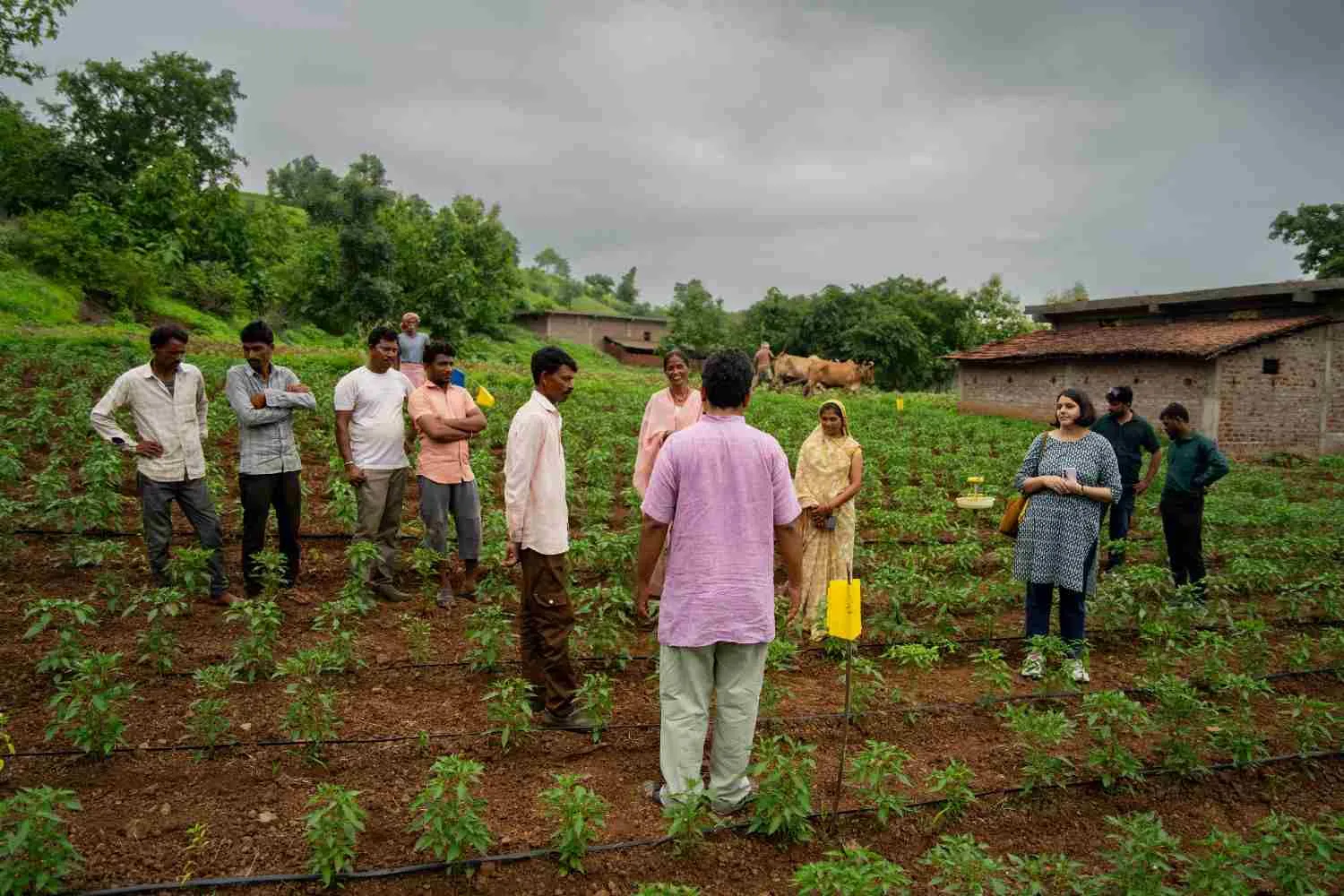
The framework assesses how regenerative agriculture practices influence farmers, households, and production systems. It tracks changes in soil health, water-use efficiency, farm productivity, income, women’s empowerment, and resilience through household surveys, field observations, and scientific testing. This helps establish whether regenerative practices are delivering measurable benefits for farming communities.

Landscape-Level Measurement
Many regenerative outcomes extend beyond individual farms. The MRV therefore monitors vegetation health, biodiversity, habitat restoration, water resources, and land-use changes across the wider landscape using GIS and remote sensing technologies. This provides evidence of collective environmental improvements that emerge as regenerative practices scale across villages and watersheds.
Multiple Lines of Evidence
The framework combines:
Farmer & Household Surveys

Add a short description here for this step.
Soil Testing & Water Testing
Add a short description here for this step.
Biodiversity Assessments
Add a short description here for this step.
Programme Monitoring
Add a short description here for this step.
Greenhouse Gas
Add a short description here for this step.
GIS & Remote Sensing
Add a short description here for this step.
This blended approach strengthens confidence in reported results by ensuring that findings are supported through multiple, complementary sources of data.
 Verification & Quality Assurance
To ensure credibility, the framework includes structured verification processes such as field audits, independent evaluations, re-surveys, geo-referenced records, digital audit trails, and cross-validation between field data and geospatial datasets. The framework also incorporates an adoption verification system that distinguishes between partial, transitional, and full adoption of regenerative practices, helping ensure that reported outcomes are linked to actual changes on the ground.
 Supporting Learning and Decision-Making
The MRV is not only designed for reporting. It enables implementing partners, brands, donors, and policymakers to understand what is working, where progress is being made, and where additional support is needed. By generating reliable evidence at regular intervals, the framework supports adaptive management and continuous improvement throughout the life of the programme.
Why It Matters
Reliable evidence for people, nature, and a more resilient future.
Regenerative agriculture is increasingly recognised as a pathway to address climate change, biodiversity loss, declining soil health, water stress, and livelihood insecurity. However, demonstrating that these outcomes are being achieved requires more than tracking activities and participation. It requires credible evidence of change. The RPLC MRV Framework was developed to provide a common system for measuring, verifying, and communicating regenerative agriculture outcomes across production landscapes.
By combining scientific measurement, global standards, and field-level practicality, the framework enables stakeholders to move beyond activity-based reporting and focus on measurable outcomes. It creates a shared evidence base that helps stakeholders understand whether regenerative practices are improving soil health, water security, biodiversity, climate resilience, farmer livelihoods, and gender inclusion.
The framework also supports continuous learning and adaptive management. By generating evidence throughout programme implementation, it helps partners identify emerging challenges, understand which interventions are delivering results, and make informed decisions to improve programme effectiveness and maximise impact.
Value for Different Stakeholders
The RPLC MRV Framework creates value for different stakeholders by providing credible, consistent, and actionable evidence on regenerative agriculture outcomes.
The RPLC MRV Framework helps connect local action to global sustainability goals. It strengthens confidence in regenerative agriculture by ensuring that outcomes can be measured, verified, compared, and communicated consistently, creating a stronger foundation for learning, investment, and long-term scaling.